Chapter 2 - The Modern Threats
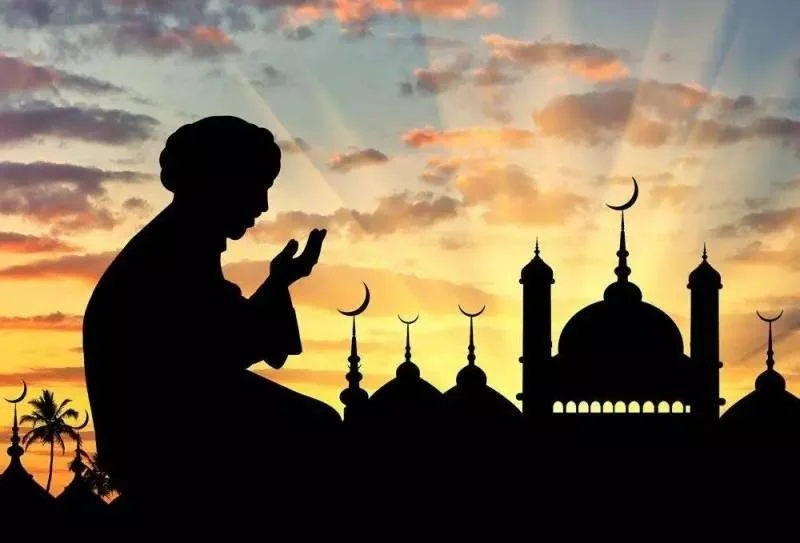
Systems that merge religion and state power extinguish liberty for both believers and dissenters.
In Islam, faith and government are inseparable — a system where religion is law, and liberty cannot survive.
Christianity, at its core, teaches a separation between God’s kingdom and Caesar’s rule: “Render unto Caesar the things that are Caesar’s, and unto God the things that are God’s.” Judaism, though deeply covenantal, historically functioned within civil structures not wholly dictated by Torah law. But Islam is different.
In the Qur’an, governance and religion are one. Law, politics, and worship are bound together under shari’a. For faithful Muslims who hold to the Qur’an’s directives, government is not neutral; it must enforce religious prescriptions. That is why, in practice, Islam as a system of governance cannot be separated from Islam as a faith.
Where Islam has shaped government, liberty has vanished. Apostasy is punished, dissent silenced, and minorities relegated to second-class status under dhimma laws. It is not Islam as “private devotion” that threatens liberty — it is Islam as “political program,” a structure that fuses state and creed by design. The “private devotion” and the “political program” are one and the same, they cannot be separated because the “private devotion” mandates the “political program.”
The Founders of the United States knew this danger well, for they had lived under a similar system. In the British Empire, the Crown and the Church of England were fused. To dissent in worship was to dissent from the state. The Revolutionary War was not fought merely for independence from a king, but for independence from a government that dictated religion.
James Madison’s Memorial and Remonstrance captured this spirit, warning against even “the smallest degree of compulsion” in matters of conscience. Washington, in his Farewell Address, cautioned that factions and religious establishments would strangle liberty. The Revolution was, at its core, a declaration that church and state must be separate if freedom is to survive.
Our courts, when faithful to the Constitution, have echoed that principle. Justice Gorsuch has written that the law’s highest purpose is protecting unpopular beliefs from coercion. Justice Thomas has stood firm that rights cannot be demoted because of political winds. And together, in Apache Stronghold v. United States, they dissented when the Court refused to protect the Apaches’ sacred site — underscoring that religious exercise is shielded, but religious establishment by the state is forbidden.
Islam’s fusion of faith and law is a living example of what the Founders fought to prevent: a government that enforces creed. It belongs in the same danger bucket as dominionism, socialism, and ideological orthodoxy in schools. In each case, liberty is extinguished when belief becomes law.
But ideology is not the only way government overreaches. Sometimes it comes not from faith or political dogma, but from sheer volume — an avalanche of laws that trap ordinary citizens. That is the danger of bureaucratic overreach, which Justice Gorsuch has called out in Over Ruled.